Types of Paintball: Speedball, Woodsball, Scenario, Milsim and More
The main ways people play paintball, what each one feels like, and which one to try first.
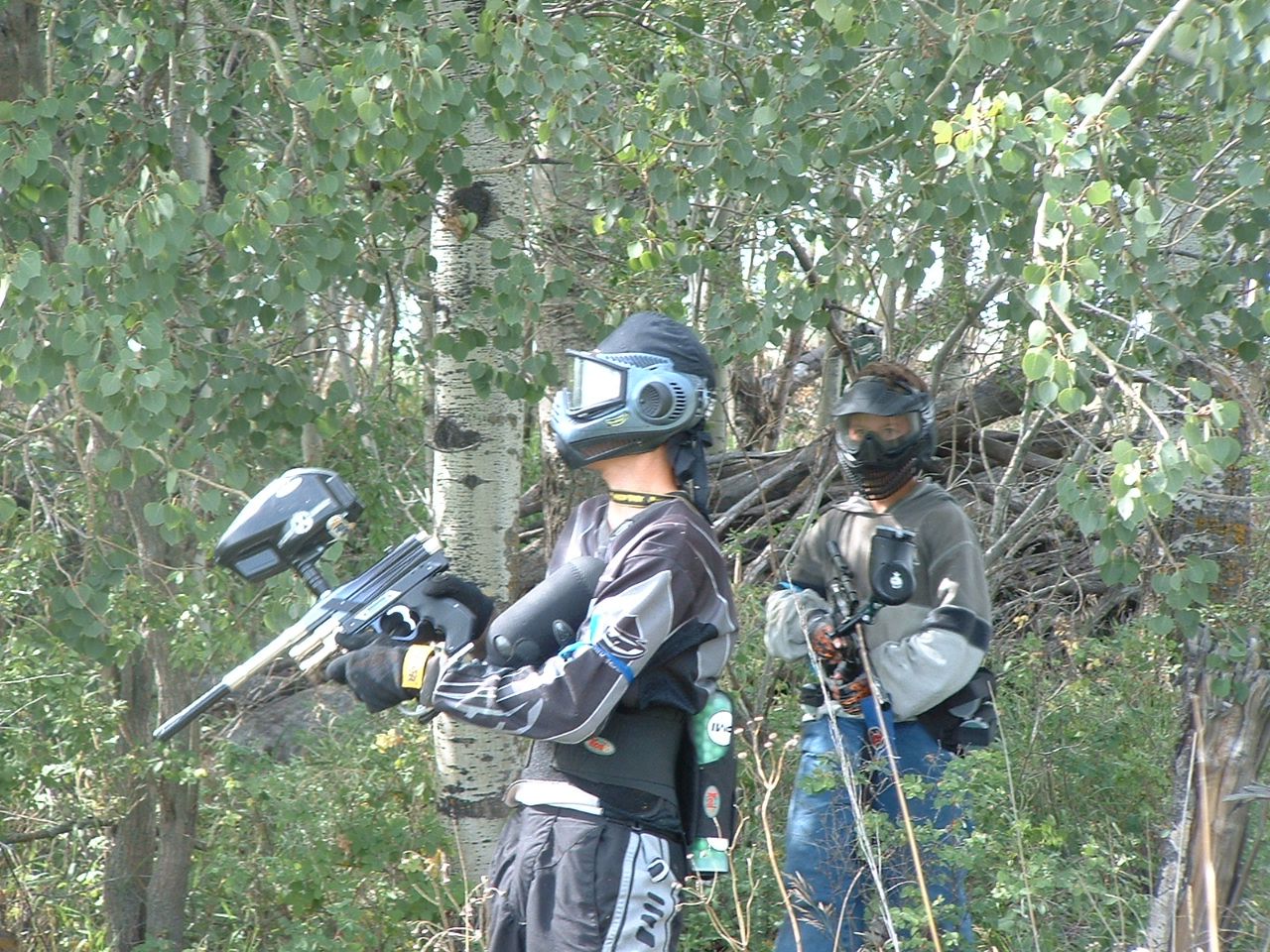
Paintball is one sport with a lot of different flavours. The basics never change: everyone wears a paintball mask, markers are chronographed to a safe speed, and if a ball breaks on you, you are out. What changes is the field, the number of players, how fast the game moves and how seriously people take the role-play.
If you are new, you will almost certainly start with a walk-on day at a local field. Once you have a few games in, these are the directions you can go.
Recreational paintball (walk-on or “rec ball”)
This is what most people mean when they say they went paintballing. You show up, rent gear or bring your own, and get mixed into teams with whoever else is there that day. Referees run short games on a mix of fields: a wooded area, a mock town or fort, and often a small speedball field.
- The feel: casual, friendly, lots of first-timers. Games usually run 5 to 15 minutes.
- Game types: elimination, capture the flag, centre flag, attack and defend. Our How do you play paintball? article explains the common ones.
- Gear: field rentals are fine. Many fields include a mask, marker, air and a bag of paint in one package.
- Best for: birthday parties, work groups, anyone trying it for the first time.
Speedball and tournament paintball
Speedball is played on a flat, symmetrical field covered in inflatable bunkers with names like the snake, the dorito, the can and the temple. Both teams see the same layout, so the game is about speed, angles and communication rather than hiding. Points are short and intense, usually over within a few minutes.
Competitive speedball is organized into leagues and divisions by skill level. Most tournament play today is five players a side, and teams play a series of points in a “race to” format, where the first team to win a set number of points takes the match. The NXL is the main professional league in the United States, and in Europe the long-running Millennium Series has since become part of NXL Europe.
- The feel: loud, fast and athletic. Players slide into bunkers, shoot on the run and call out positions constantly.
- Positions: front players (snake and dorito side), mid players and back players. Jim Brown’s Paintball: The Beginning from our 2003 archive still explains the roles well.
- Gear: light electronic markers, fast electronic loaders, a pack of pods, jersey, padded pants and cleats.
- Best for: people who like team sports and want to compete. Many fields run beginner speedball nights and local tournaments.
From the archive: Speedball tactics and tips, Moving up, What makes a good tournament player? and Tournament day.
Woodsball
Woodsball is paintball in natural terrain: trees, brush, creek beds, hills, plus whatever forts, bridges or old vehicles the field has added. You often cannot see the other team at the start of a game, so it is about stealth, flanking, patience and working with a buddy. This is the style the sport started with in 1981.
- The feel: slower and sneakier. Long stretches of quiet, then sudden firefights.
- Gear: anything goes. Camouflage helps but is not required. A marker with a medium-length barrel is easier to manage in the brush.
- Best for: groups of friends, people who like strategy and the outdoors.
From the archive: Woodsball tips and tactics, Snipers in paintball and Snipers vs campers.
Scenario games and big games
Scenario games take woodsball and scale it up. A field hosts a themed event, sometimes over a full day or a whole weekend, with dozens or hundreds of players split into two or more armies. Instead of one quick elimination game, teams complete missions for points: take a building, escort a convoy, hold a bridge, capture a flag. Eliminated players usually walk back to a respawn point and go back in, so you play almost nonstop.
- The feel: a huge, rolling game with a storyline. Some events have props like mock tanks, characters and command staff.
- Gear: whatever you use for woodsball, plus plenty of paint, water and a comfortable setup for a long day.
- Best for: players who love woodsball and want a bigger, more memorable day.
Milsim (military simulation)
Milsim is the most realism-focused style. Events use rules that mimic real military operations: limited paint, realistic gear and uniforms, chains of command, briefings and missions that can run through the night. Some milsim events are magfed only (see below). There is a lot of overlap with scenario games; the difference is mostly how strictly the realism rules are applied.
- The feel: tactical, slow-burning and immersive. Teamwork and planning matter more than volume of paint.
- Gear: tactical vests, magfed markers, radios. Events publish their own gear and uniform rules.
- Best for: players who like planning and role-play, and people coming over from airsoft.
Magfed
Magfed is a style of marker rather than a type of field. Instead of a hopper on top, the marker feeds from a magazine, much like a real rifle or pistol. Magazines hold far less paint than a hopper, so every shot counts, and reloading under pressure becomes part of the game. Some magfed markers, built for or converted to First Strike, can fire First Strike rounds: fin-stabilized, bullet-shaped paintballs that the maker says fly straighter and farther than round balls.
Some fields run magfed-only games or nights, and magfed is common at milsim events.
Low-impact paintball (.50 calibre)
Low-impact paintball uses smaller .50 calibre balls instead of the standard .68. A .50 calibre ball carries less than half the energy of a full-size ball at the same speed, and fields usually run low-impact markers slower too, so it stings a lot less. Fields use it for younger players, birthday parties and groups who are nervous about the hits. It is still real paintball with the same safety rules and referees.
- Best for: kids (many fields allow younger ages for low-impact sessions), first-timers who are worried about pain.
- Trade-off: shorter range and more drift in the wind.
Indoor and arena paintball
Indoor fields keep the game going through winter and bad weather. Most are set up speedball style, with inflatable or built bunkers on a hard floor or turf, and some add maze or urban layouts. Expect close-range games, so a hoodie and gloves are worth wearing. Indoor fields may run their markers at a lower speed than outdoor fields.
Pump and stock class
The throwback format. Pump paintball uses markers you cock by hand for every shot, and stock class goes further with small 12-gram CO2 cartridges and tube-fed paint. It forces you to aim, move and make every shot count, the way the first games were played. Pump play still has a loyal following, with dedicated games and events.
Quick comparison
| Style | Where it’s played | Players per side | Pace | Best for |
|---|---|---|---|---|
| Recreational | Mixed fields at a local park | Varies, often 5 to 20 | Medium | First-timers, groups |
| Speedball | Symmetrical inflatable field | Usually 3 to 7, mostly 5 | Very fast | Competitive players |
| Woodsball | Natural terrain, forts | Any | Slow to medium | Friends, strategy fans |
| Scenario | Large woods and town fields | Dozens to hundreds | Long, rolling | Big memorable days |
| Milsim | Large fields, realistic rules | Dozens to hundreds | Slow, tactical | Realism and role-play |
| Low-impact | Same fields, smaller paint | Any | Medium | Kids, nervous first-timers |
Which one should you try first?
Start with a recreational walk-on day or a private group booking at a local field. You will probably get a taste of woodsball and speedball in the same day. If you loved sprinting and sliding, look for a beginner speedball night. If you loved sneaking up on people, look for a woodsball day or a local scenario event.
Before you go, read Your first day of paintball for what to wear, what it costs and what happens at the safety briefing.